Guide
Pillow Acne: Can Your Pillowcase Cause Breakouts?
What builds up on your pillowcase, what pillow acne looks like, and how often to change your pillowcase. Based on published studies and dermatologists’ advice.
The short answer
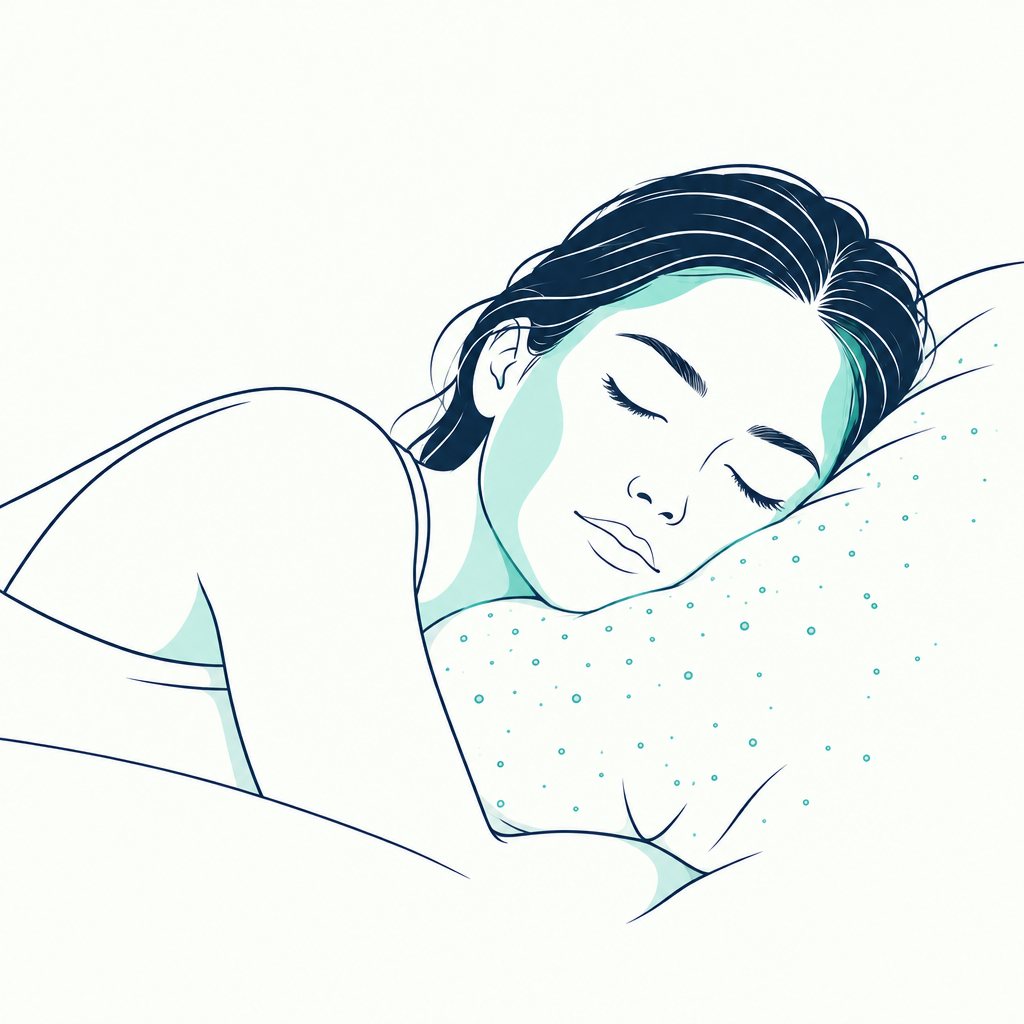
A pillowcase can contribute to acne. Within a week of use it collects skin bacteria, fungi, oil and sweat, and your face rests on it for hours every night. Dermatologist Marisa Garshick, MD, says that buildup can clog pores and trigger breakouts, and suggests changing your pillowcase every two to three days if you’re acne-prone.
Can your pillowcase cause acne?
Acne has many causes, including hormones, genes and excess oil, and no study has yet measured how much a pillowcase alone adds. Still, acne from a pillowcase, sometimes called pillow acne, is a common concern, and the Canadian Dermatology Association recommends washing pillowcases often because they absorb oil and can deposit more dirt and oil back on your skin.
“A fresh pillowcase can reduce the buildup of acne-causing bacteria, dirt, and oil, which can clog pores and trigger breakouts.”
Marisa Garshick, MD, board-certified dermatologist (Parade, 2025)
What builds up on your pillowcase?
Every night, your skin and hair leave oil (sebum), sweat, dead skin cells and leftover skincare on the fabric, and skin bacteria come along with them. Here’s what researchers found when they tested used bedding.
Bacteria and fungi build up within a week
In a 2026 study, nine people slept on fresh bed linen for one day up to four weeks, and researchers sampled the pillow, hip and foot areas. Bacterial and fungal levels rose over the first week, then stayed at that level for the rest of the month. In 65% of samples, Staphylococcus, a common group of skin bacteria, made up most of what was found.
Letters in Applied Microbiology · 2026
Oil feeds the bacteria living in fabric
A 2021 study found that skin bacteria that get into fabric feed on sweat and sebum, and can form colonies that are hard to remove with regular washing. That study looked at clothing, but a pillowcase gets the same oil and sweat every night.
Microbiology Spectrum · 2021
The pillow underneath isn’t clean either
When researchers cultured ten used pillows, each one held between 4 and 16 different species of fungi. A pillowcase is the only layer between your face and that pillow.
Allergy · 2006
How pillow acne happens
1. What’s on the fabric moves to your skin
In a 2022 lab study, bacteria on fabric moved onto a skin-like surface on contact. A 2025 review of 21 studies found that, depending on conditions like pressure and moisture, anywhere from under 1% to 39% of the microbes on a textile transferred to skin or a skin-like surface.
2. Pressure and friction (acne mechanica)
Dermatologists use the term acne mechanica for breakouts made worse by pressure, friction and rubbing. A cheek pressed into a pillow for six to eight hours, with heat and sweat trapped underneath, gets a mild version of that.
3. The same spot, every night
Most people sleep in the same position night after night, so the same patch of skin meets the same patch of fabric. That’s why pillow-related breakouts often show up on one side.
Sources: American Journal of Infection Control · 2022 · Infection Control & Hospital Epidemiology · 2025 · Archives of Dermatology · 1975
What does pillow acne look like on your face?
“Pillow acne” isn’t a medical diagnosis. It’s a common name for breakouts that line up with where your face meets the pillow. Breakouts from pressure and friction tend to appear as small, rough bumps or red pimples in the area of contact. Signs your pillow may be part of it:
- Breakouts on the cheek, jawline or temple on the side you sleep on
- Small bumps along your hairline or forehead, especially if you use hair oil or styling products
- Flare-ups after a few nights on a hotel pillow or someone else’s bedding
- A pillowcase that looks dingy or feels slick after a few nights
- Breakouts that didn’t improve after you changed your skincare
How often should you change your pillowcase if you have acne?
- Acne-prone or oily skin: every 2–3 days (Marisa Garshick, MD)
- Hot weather or heavy sweating: daily, suggests aesthetician Kristin Gunn
- Everyone else: at least once a week
The 2026 bedding study helps explain the timing: most of the buildup happened within the first week, so a pillowcase used for two weeks isn’t much cleaner than one used for four.
Hospitals take the pillow cover seriously. In a 2026 study at a Korean intensive care unit, adding daily pillow cover changes to the usual hygiene routine was followed by significantly fewer patients picking up a drug-resistant bacterium.
YouGov, 6,658 U.S. adults, July 2021. “Less often / never” combines every 4–6 months (3%), 7–8 months (1%), less than every 8 months (2%) and never (2%). 5% didn’t know.
Most of us change ours far less often than that: only 35% wash their pillowcases weekly or more, and 60% go two to three weeks or longer.
Sources: Parade · 2025 · Letters in Applied Microbiology · 2026 · Antimicrobial Resistance & Infection Control · 2026 · YouGov · 2021
Does washing your pillowcase kill bacteria?
Mostly, but not always. In a 2017 study on fabrics used in healthcare uniforms, a 40°C (104°F) wash removed most of the bacteria, but some survived and spread to clean fabric in the same load. Only a 60°C (140°F) wash removed them completely. Many pillowcases, especially silk and other delicate fabrics, can’t be washed that hot.
Sources: Journal of Applied Microbiology · 2017
What’s the best pillowcase material for acne?
There’s no strong research showing that one fabric prevents acne. Silk and satin are smoother, which may mean less friction. Cotton breathes well and can be washed hot. Lab studies show the fabric’s surface affects how much bacteria it passes to skin, but for any material, how recently it was changed matters more than what it’s made of.
Sources: Curology · 2023 · American Journal of Infection Control · 2022
How to get rid of pillow acne and stop it coming back: 6 steps
1. Change your pillowcase every 2–3 days
Keep a few spares so a clean one is always ready.
2. Wash it hot if the label allows
A 60°C (140°F) wash removed bacteria completely in the 2017 study. If your skin is sensitive, use a fragrance-free detergent.
3. Go to bed with a clean face
Remove makeup, cleanse, and let your products absorb for a few minutes before you lie down.
4. Keep hair products off your pillow
Tie your hair back, or keep hair oil to the ends.
5. Replace your pillow every one to two years
Dr. Garshick recommends this to limit buildup of dust, bacteria and allergens.
6. See a dermatologist if it doesn’t improve
If your acne is painful, deep or leaving marks, see a board-certified dermatologist. A clean pillowcase helps, but it doesn’t replace treatment.
A fresh surface every night, without the laundry
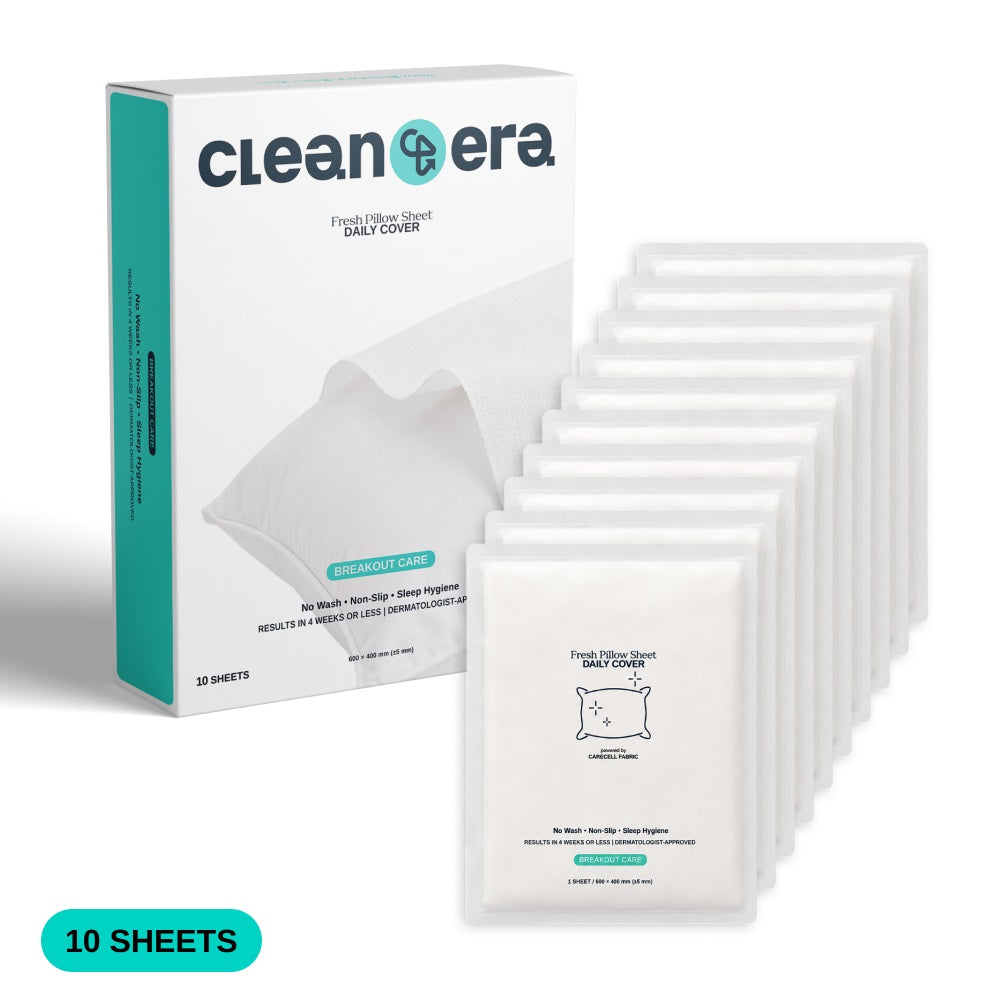
Changing your pillowcase every two to three days means a load of laundry every few days, and most of us can’t keep that up. That’s what the Clean Era Daily Pillow Sheet is for.
The Clean Era Daily Pillow Sheet is made for acne-prone skin. It’s a thin sheet of soft, breathable cellulose fabric that you lay over your pillow at night and toss in the morning, so your face starts on a surface no one has slept on. The fabric is antibacterial-treated: in an 18-hour lab test, CareCell™ fabric inhibited the growth of C. acnes bacteria by 99.9%.* The finished sheet scored 0.00 for skin irritation in a 33-person patch test.**
Join the waitlistLaunching November 2026
*Lab test on CareCell™ fabric, 18 hours, KS K 0693. **24-hour patch test on the finished sheet, 33 participants.
Read more
- How Often Should You Change Your Pillowcase If You Have Acne?
- Why Am I Only Breaking Out on One Side of My Face?
- Can a Dirty Pillowcase Cause Acne?
- Does Washing Your Pillowcase Actually Kill Bacteria?
- Why Do I Break Out When I Travel?
- Silk vs Cotton Pillowcases for Acne: What the Research Says
- Can Fabric Softener Cause Breakouts?
Frequently asked questions
Is my pillow causing my acne?
It may be part of it, especially if breakouts show up on the side you sleep on. Acne has many causes, but a used pillowcase holds bacteria, oil and sweat that can transfer back to your skin. Try a fresh pillowcase every two to three days for a few weeks and see what changes.
Can a dirty pillowcase cause acne?
No study has measured a pillowcase’s effect on its own, but dermatologist Marisa Garshick, MD, says the bacteria, dirt and oil that build up on one can clog pores and trigger breakouts.
How fast does a pillowcase get dirty?
Quickly. In a 2026 study of bed linen used at home, bacterial and fungal levels rose over the first week and then stayed at that level for the rest of the month.
Does sleeping on your side cause acne?
Side sleeping doesn’t cause acne by itself, but it keeps one side of your face pressed into the pillow for hours. That pressure and friction can make breakouts on that side worse.
Should I change my pillow or just my pillowcase?
Both, on different schedules: your pillowcase every two to three days if you’re acne-prone, and your pillow every one to two years.
Can I just put a towel on my pillow?
Yes, as long as it’s clean. A towel collects oil the same way a pillowcase does, so it only helps if you swap it every night or every few nights.
Can pillows cause pimples?
A pillow can contribute to pimples the same way it contributes to acne: oil, sweat and bacteria build up on the pillowcase, and your face rests on it for hours. Pimples from pillow contact usually show up on the cheek, jawline or temple of the side you sleep on.
Can sharing a pillow cause acne?
Sharing a pillow means your face also touches someone else’s oil, hair products and skin bacteria. Pillowcase hygiene matters even more, so change it every two to three days.
Can feather or down pillows cause acne?
No study has compared pillow fillings and acne. A 2006 study found fungi in both feather and synthetic pillows, so whatever the filling, keep a clean pillowcase on top and replace the pillow every one to two years.
Sources
- Cayrou C, Abu-Aita M, Laird K. From clean to colonized: microbial dynamics of bed linen over time. Letters in Applied Microbiology, 2026. pubmed.ncbi.nlm.nih.gov/42747176/
- Møllebjerg A, et al. The bacterial life cycle in textiles is governed by fiber hydrophobicity. Microbiology Spectrum, 2021. pubmed.ncbi.nlm.nih.gov/34643452/
- Woodcock AA, et al. Fungal contamination of bedding. Allergy, 2006. pubmed.ncbi.nlm.nih.gov/16364170/
- Mallick D, Gupta D, Sharma S. Transfer of bacteria between fabric and surrogate skin. American Journal of Infection Control, 2022. pubmed.ncbi.nlm.nih.gov/34774893/
- Gassmann N, et al. Transfer of microorganisms to and from textiles in healthcare settings: a systematic review. Infection Control & Hospital Epidemiology, 2025. pubmed.ncbi.nlm.nih.gov/41098139/
- Mills OH Jr, Kligman A. Acne mechanica. Archives of Dermatology, 1975. pubmed.ncbi.nlm.nih.gov/123732/
- Canadian Dermatology Association. Acne. dermatology.ca/public-patients/diseases-conditions/skin-cond…
- Parade. How Often Should You Change Your Pillowcase? With Marisa Garshick, MD, and aesthetician Kristin Gunn, 2025. parade.com/health/how-often-should-you-change-your-pillowcas…
- Suh J, et al. Effect of daily pillow cover replacement on the incidence of carbapenem-resistant Acinetobacter baumannii in the medical ICU. Antimicrobial Resistance & Infection Control, 2026. pubmed.ncbi.nlm.nih.gov/41845535/
- YouGov. How often do you wash your pillowcases? 6,658 U.S. adults, July 23, 2021. yougov.com/en-us/daily-results/20210723-f3900-3
- Riley K, et al. The effect of low-temperature laundering and detergents on the survival of E. coli and S. aureus on textiles used in healthcare uniforms. Journal of Applied Microbiology, 2017. pubmed.ncbi.nlm.nih.gov/28489297/
- Curology. How often should I change my pillowcase to help prevent acne? Medically reviewed, 2023. curology.com/blog/how-often-should-i-change-my-pillowcase-to…
- Curology. Everything you need to know about acne mechanica. 2022. curology.com/blog/acne-mechanica-treatment/
This guide is for general information and isn’t medical advice. The researchers and experts cited here did not test or endorse Clean Era.