Can a Dirty Pillowcase Cause Acne?
The short answer
A dirty pillowcase can contribute to acne. Within a week it collects skin bacteria, fungi, oil and sweat, and some of that can transfer back to your skin. No study has measured a pillowcase’s effect on its own, but dermatologist Marisa Garshick, MD, says the buildup can clog pores and trigger breakouts.
What’s on a dirty pillowcase, up close?
Skin bacteria and fungi, within a week
In a 2026 study of bed linen used at home, bacterial and fungal levels rose over the first week and stayed there for the rest of the month. In 65% of samples, Staphylococcus, a common group of skin bacteria, made up most of what was found.
Letters in Applied Microbiology · 2026
Oil that feeds bacteria
Skin bacteria that get into fabric feed on sweat and sebum and can form colonies that are hard to remove with regular washing, according to a 2021 study on textiles.
Microbiology Spectrum · 2021
Fungi in the pillow underneath
Ten used pillows each held between 4 and 16 species of fungi in a 2006 study. The pillowcase is the only layer between your face and that pillow.
Allergy · 2006
How a dirty pillowcase can lead to breakouts
First, what’s on the fabric can move to your skin. In a 2022 lab study, bacteria on fabric transferred to a skin-like surface on contact, and a 2025 review of 21 studies found transfer from textiles to skin ranging from under 1% to 39%, depending on pressure and moisture. The Canadian Dermatology Association says pillowcases absorb oil and can deposit more dirt and oil back on your skin.
Second, pressure and friction make it worse. Breakouts aggravated by pressure and rubbing are called acne mechanica, and a face pressed into a pillow for hours gets a mild version of that.
How do I know if my pillowcase is causing my acne?
- Breakouts are worse on the side you sleep on.
- You get bumps along your hairline and you use hair oil or styling products.
- Your skin flares after nights on hotel or borrowed bedding.
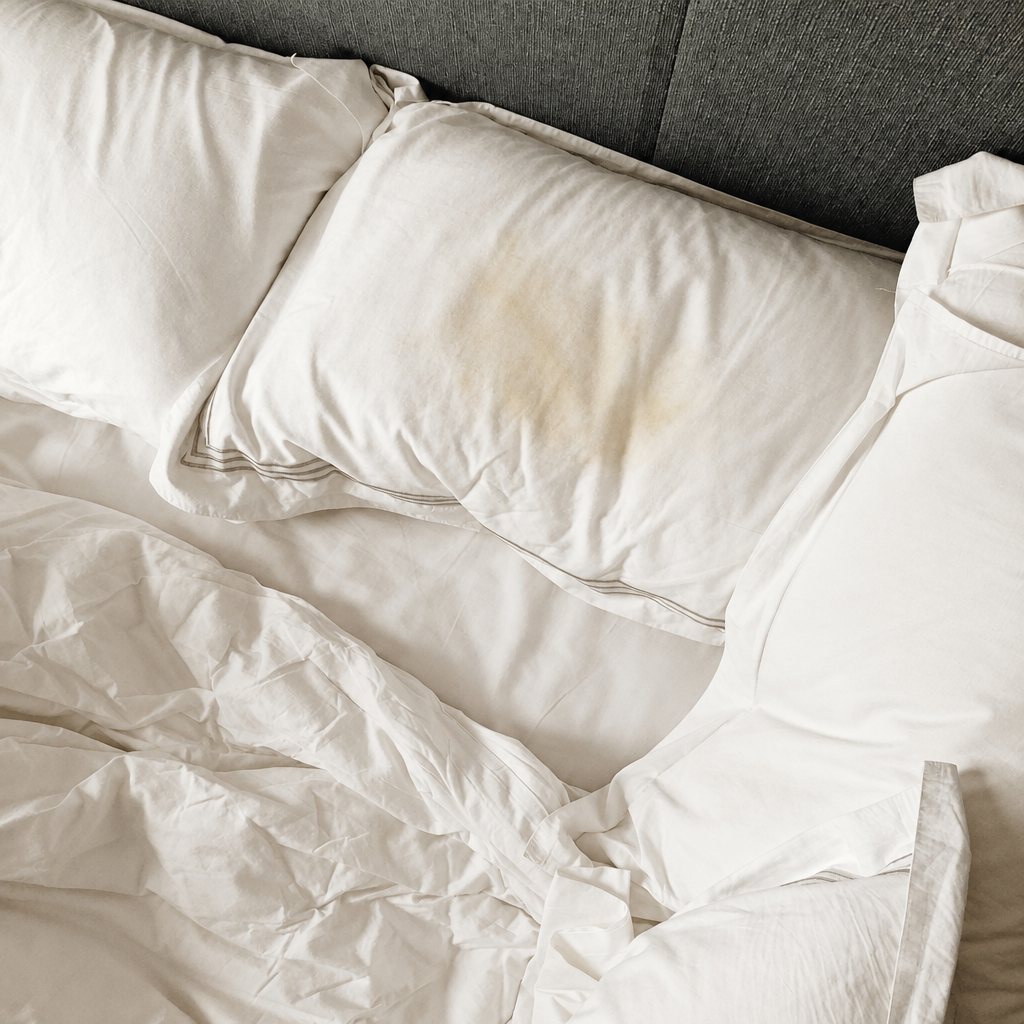
- Your pillowcase looks dingy or feels slick after a few nights.
- Changing your skincare hasn’t helped.
The simplest test: keep everything else the same and switch to a fresh pillowcase every two to three days for a few weeks. If your skin calms down, especially on your sleeping side, your pillowcase was likely part of it.
How often should you wash your pillowcase to avoid acne?
- Change your pillowcase every 2–3 days (Marisa Garshick, MD).
- Wash it hot if the label allows.
- Go to bed with a clean face and keep hair products off the pillow.
- Replace your pillow every one to two years.
The full breakdown is in our Pillow Acne guide.
A fresh surface every night, without the laundry
A pillowcase starts collecting bacteria from the first night. The usual advice is to swap it every two to three days, if you can keep up with the laundry.
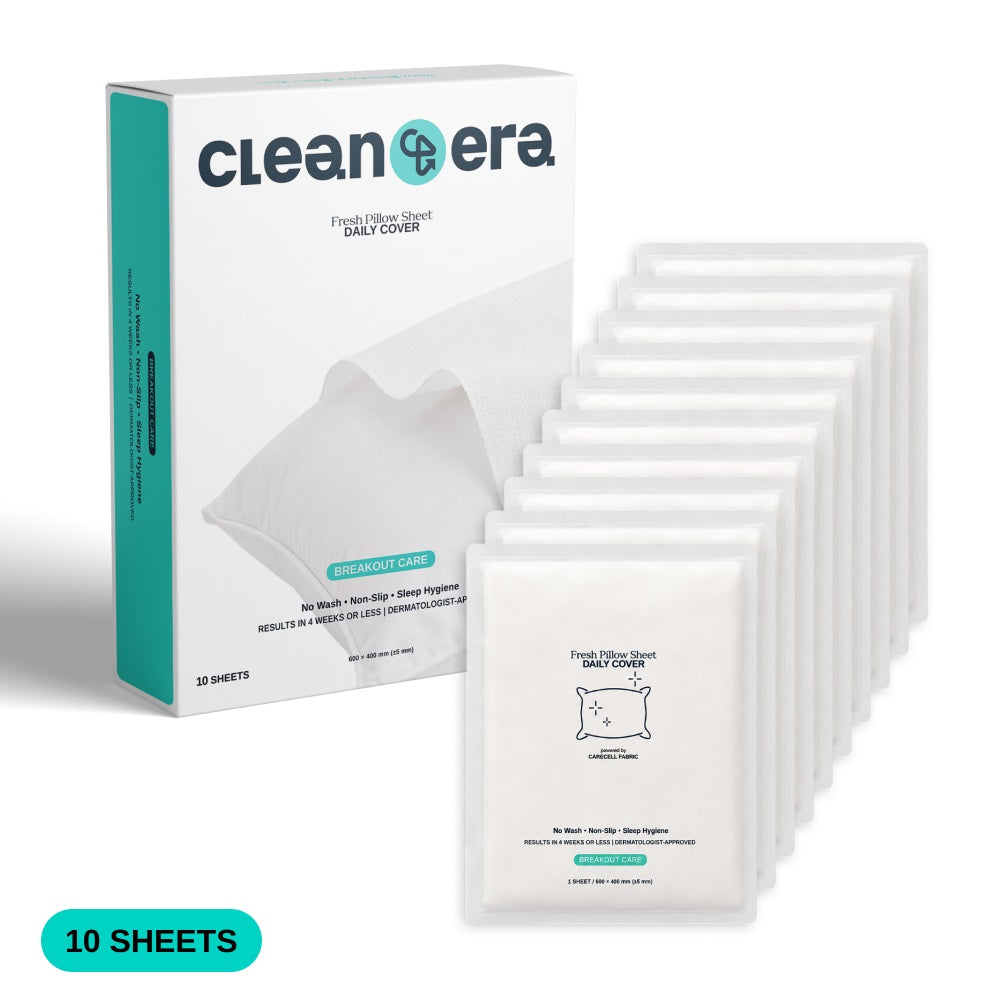
The Clean Era Daily Pillow Sheet is made for acne-prone skin. It’s a thin sheet of soft, breathable cellulose fabric that you lay over your pillow at night and toss in the morning, so your face starts on a surface no one has slept on. The fabric is antibacterial-treated: in an 18-hour lab test, CareCell™ fabric inhibited the growth of C. acnes bacteria by 99.9%.* The finished sheet scored 0.00 for skin irritation in a 33-person patch test.**
Join the waitlistLaunching November 2026
*Lab test on CareCell™ fabric, 18 hours, KS K 0693. **24-hour patch test on the finished sheet, 33 participants.
Frequently asked questions
How long does it take for a pillowcase to get dirty?
Days, not weeks. In a 2026 study, most of the bacterial and fungal buildup happened within the first week.
What does pillow acne look like?
Usually small bumps or red pimples where your face meets the pillow, often on the cheek, jawline or temple on the side you sleep on.
Can a dirty pillowcase cause acne scars?
Scarring comes from acne itself, especially deep or picked breakouts. If your acne is leaving marks, see a dermatologist; early treatment helps prevent scarring.
Can dirty sheets cause acne?
Sheets collect the same oil, sweat and skin bacteria as pillowcases, just on the parts of your body that touch them. Washing them weekly is a common baseline.
Can dirty sheets cause back acne?
They may play a part. Dermatologists have reported acne mechanica, breakouts made worse by pressure and friction, from lying against a bed for long periods. Clean sheets and showering after sweating both help.
Can a dirty pillowcase touching your face cause other problems?
Besides acne, a pillowcase that hasn’t been washed in a while can irritate sensitive skin. If you get an itchy rash where your face touches the pillow, see a dermatologist, since that can be contact dermatitis rather than acne.
Sources
- Cayrou C, et al. From clean to colonized: microbial dynamics of bed linen over time. Letters in Applied Microbiology, 2026. pubmed.ncbi.nlm.nih.gov/42747176/
- Møllebjerg A, et al. The bacterial life cycle in textiles is governed by fiber hydrophobicity. Microbiology Spectrum, 2021. pubmed.ncbi.nlm.nih.gov/34643452/
- Woodcock AA, et al. Fungal contamination of bedding. Allergy, 2006. pubmed.ncbi.nlm.nih.gov/16364170/
- Mallick D, Gupta D, Sharma S. Transfer of bacteria between fabric and surrogate skin. American Journal of Infection Control, 2022. pubmed.ncbi.nlm.nih.gov/34774893/
- Gassmann N, et al. Transfer of microorganisms to and from textiles in healthcare settings: a systematic review. Infection Control & Hospital Epidemiology, 2025. pubmed.ncbi.nlm.nih.gov/41098139/
- Canadian Dermatology Association. Acne. dermatology.ca/public-patients/diseases-conditions/skin-cond…
- Mills OH Jr, Kligman A. Acne mechanica. Archives of Dermatology, 1975. pubmed.ncbi.nlm.nih.gov/123732/
- Parade. How Often Should You Change Your Pillowcase? With Marisa Garshick, MD, and aesthetician Kristin Gunn, 2025. parade.com/health/how-often-should-you-change-your-pillowcas…
- Mazhar M, Simpson M, Marathe K. Inner thigh friction as a cause of acne mechanica. Pediatric Dermatology, 2019. pubmed.ncbi.nlm.nih.gov/30883890/
This article is for general information and isn’t medical advice. The researchers and experts cited here did not test or endorse Clean Era.