Why Am I Only Breaking Out on One Side of My Face?
The short answer
Acne on one side of the face only often follows whatever touches that side most: the pillow you sleep on, your phone, your hands or your hair. Pressure, friction and the oil and bacteria these things carry can make breakouts worse where they make contact.
5 common reasons for breakouts on one side
1. The side you sleep on (acne on your left or right cheek)
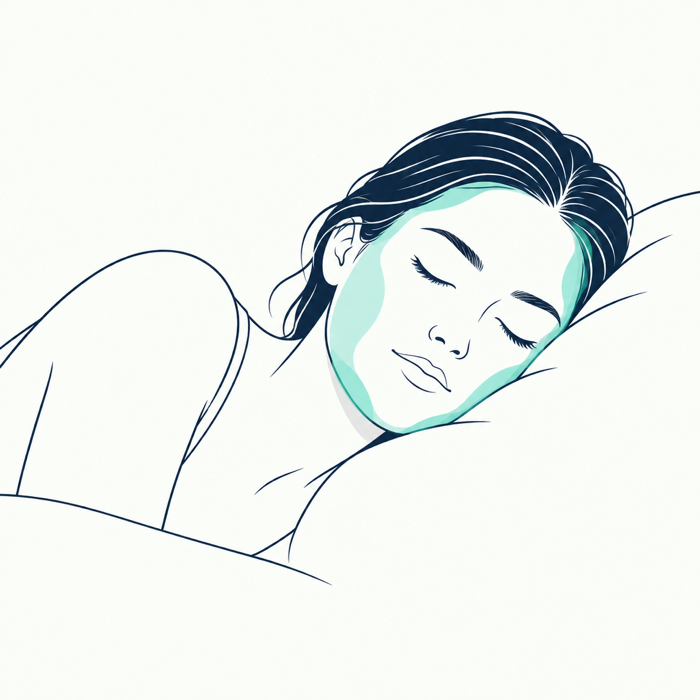
If you sleep on your side, the same cheek spends hours pressed into the same pillowcase. Researchers describe compression, shear and stress forces acting on the face in side and stomach sleeping. Dermatologists call breakouts made worse by pressure and friction acne mechanica. Add a pillowcase that’s been collecting oil and skin bacteria for a week, and that side gets the most exposure.
2. Your phone (cheek and jawline on one side)
Phones pick up bacteria from hands and surfaces. In a 2020 study that swabbed students’ and staff’s phones at a Malaysian university, every phone tested carried bacteria, and S. aureus was among the most common types found. Doctors have also reported a case of acne on one side of the face that they suspected was linked to phone use. If you hold your phone to the same ear, that cheek and jawline get the contact.
3. Your hands (chin acne on one side)
Most of us touch our faces without noticing. In one study, students touched their faces 23 times an hour on average. Resting your chin or cheek on the same hand at your desk puts pressure and whatever is on your hands on one side.
4. Hair and hair products (one side of your forehead)
Breakouts from hair products, sometimes called pomade acne, show up most often on the forehead and temples. If you part your hair to one side or use hair oil, the side your hair falls on gets more of it, and so does your pillowcase.
5. Things that rub the same spot
Glasses, a mask strap, a helmet chin strap or a headset that sits on one side can all cause the same pressure-and-friction effect along the line where they touch.
How to read the pattern
Where the breakouts sit is the best clue. These patterns aren’t a diagnosis, but they tell you what to change first:
- Cheek and jawline on the side you sleep on: your pillowcase and sleep position
- Lower cheek and jaw on your phone side: your phone
- Chin or one cheek: resting your face on your hand
- Hairline and temple: hair products or the way your hair falls
- A line or band: glasses, straps or a headset
What to do about it
- Change your pillowcase every 2–3 days, as dermatologist Marisa Garshick, MD, recommends for acne-prone skin.
- Wipe your phone regularly, and use speaker or earbuds for long calls.
- Keep your hands off your face, especially at your desk.
- Keep hair oil and styling products off your face and pillow.
- Give it a few weeks. Change one or two things at a time so you can tell what helped.
If breakouts are painful, deep or leaving marks, or they don’t follow any contact pattern, see a board-certified dermatologist.
More on how pillows affect skin in our Pillow Acne guide.
A fresh surface every night, without the laundry
If it’s the side you sleep on, the usual advice is a fresh pillowcase every few days. That’s a lot of laundry to keep up with.
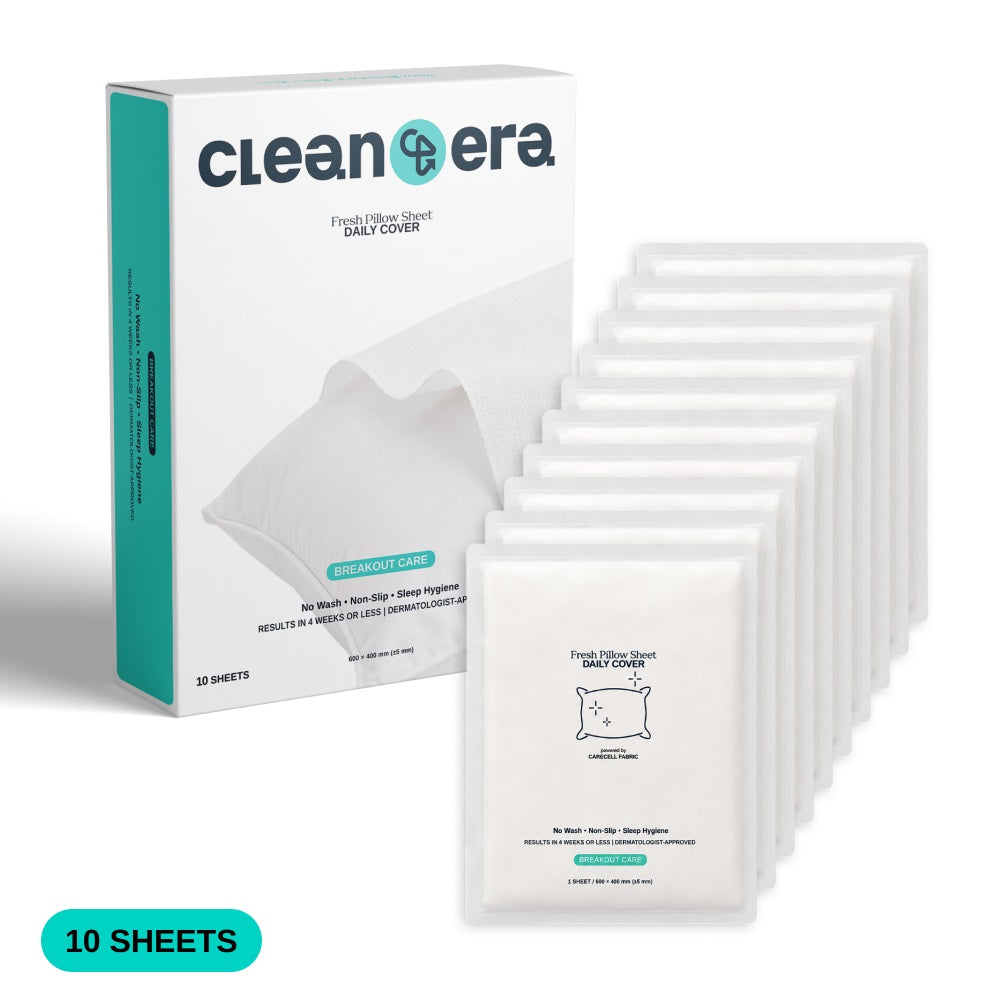
The Clean Era Daily Pillow Sheet is made for acne-prone skin. It’s a thin sheet of soft, breathable cellulose fabric that you lay over your pillow at night and toss in the morning, so your face starts on a surface no one has slept on. The fabric is antibacterial-treated: in an 18-hour lab test, CareCell™ fabric inhibited the growth of C. acnes bacteria by 99.9%.* The finished sheet scored 0.00 for skin irritation in a 33-person patch test.**
Join the waitlistLaunching November 2026
*Lab test on CareCell™ fabric, 18 hours, KS K 0693. **24-hour patch test on the finished sheet, 33 participants.
Frequently asked questions
Can sleeping on one side cause acne?
Side sleeping doesn’t cause acne by itself, but it keeps one cheek pressed into the pillow for hours. That pressure, friction and pillowcase buildup can make breakouts on that side worse.
Why am I breaking out on the right side of my jawline?
Check what touches that spot: your phone if you hold it on the right, your hand if you rest your chin there, or your pillow if you sleep on your right side.
Can my phone cause acne?
Phones carry bacteria, and doctors have reported one-sided acne they suspected was linked to phone use. Wiping your phone and using earbuds is an easy change to test.
What does acne on the left cheek mean?
Some face-mapping charts link each area of the face to a different organ. A more practical first step is to look at what touches that cheek most: your pillow, your phone or your hand. The same goes for acne on the right cheek.
Why is acne on one side of my face not going away?
If the trigger is still touching that side every day, the breakouts keep coming back. Change your pillowcase every two to three days and keep your phone and hands off that side for a few weeks. If it still won’t clear, see a board-certified dermatologist.
Can hormonal acne be on one side?
Hormones can play a part in acne. If your breakouts flare around your period or don’t follow any contact pattern, a board-certified dermatologist can help work out what’s behind them.
Sources
- Anson G, Kane MA, Lambros V. Sleep wrinkles: facial aging and facial distortion during sleep. Aesthetic Surgery Journal, 2016. pubmed.ncbi.nlm.nih.gov/27329660/
- Mills OH Jr, Kligman A. Acne mechanica. Archives of Dermatology, 1975. pubmed.ncbi.nlm.nih.gov/123732/
- Cayrou C, et al. From clean to colonized: microbial dynamics of bed linen over time. Letters in Applied Microbiology, 2026. pubmed.ncbi.nlm.nih.gov/42747176/
- Hikmah N, Anuar TS. Mobile phones: a possible vehicle of bacterial transmission in a higher learning institution in Malaysia. Malaysian Journal of Medical Sciences, 2020. pubmed.ncbi.nlm.nih.gov/32788850/
- Rachadi H, et al. Unilateral acne: think about cell-phone acne. Dermatology Online Journal, 2025. pubmed.ncbi.nlm.nih.gov/40991511/
- Kwok YL, Gralton J, McLaws ML. Face touching: a frequent habit that has implications for hand hygiene. American Journal of Infection Control, 2015. pubmed.ncbi.nlm.nih.gov/25637115/
- StatPearls. Acneiform Eruptions. National Library of Medicine. www.ncbi.nlm.nih.gov/books/NBK459207/
- Parade. How Often Should You Change Your Pillowcase? With Marisa Garshick, MD, and aesthetician Kristin Gunn, 2025. parade.com/health/how-often-should-you-change-your-pillowcas…
This article is for general information and isn’t medical advice. The researchers and experts cited here did not test or endorse Clean Era.